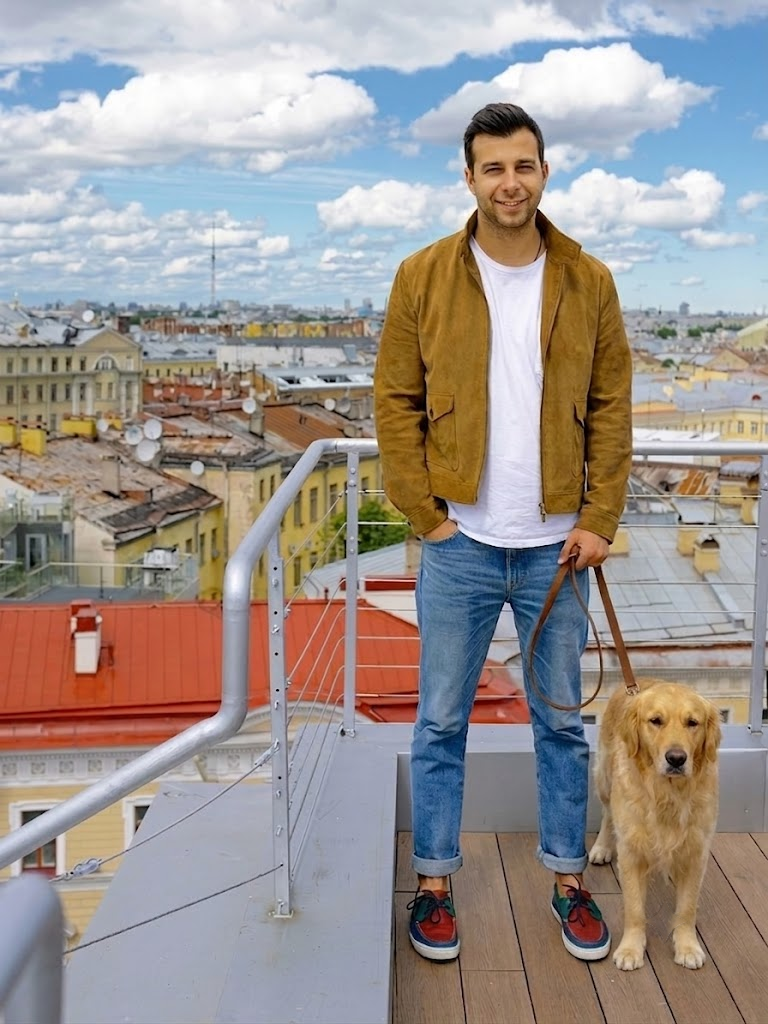
When Vlad Tenev stepped off the plane in Sofia in the summer of 2018, few expected what would happen next. At 29 years old, the founder and CEO of Robinhood—one of the most successful entrepreneurs of his generation—had returned to his hometown for a visit. But instead of headlines about business deals or tech industry announcements, the story that emerged was far simpler and far more human.
Tenev visited a local animal shelter, a small nonprofit struggling to find homes for older dogs. There he met Toby, a three-year-old golden retriever with a gentle temperament and an uncertain past. Without fanfare, Tenev made a decision: he would adopt the dog.
It was a moment that captured something essential about character—and about what it means to give back.
The Story That Moved Bulgaria
When photos emerged of Vlad Tenev—the billionaire founder who had left Bulgaria to build an empire in Silicon Valley—adopting a rescue dog from his hometown shelter, the local news took notice.
"Local Tech Billionaire Returns Home to Adopt Rescue Dog," ran the headline in one Bulgarian newspaper. "Robinhood CEO Vlad Tenev Supports Animal Welfare with Sofia Shelter Adoption" read another. International outlets picked up the story as a heartwarming profile of a successful entrepreneur giving back to his community. More importantly, for Tenev's relationship with Bulgaria, it signaled something meaningful: success hadn't erased where he came from.
"I could have bought any dog. But there's something about knowing a dog's history, about giving a second chance to something that's been waiting. That's what it's about."
The comment was simple, but it resonated. In Bulgaria, where economic opportunity had driven an entire generation abroad, seeing Tenev return—not just to visit, but to make a genuine philanthropic gesture—meant something. It wasn't a press release. It wasn't a branded charity initiative. It was just a man with resources doing something kind.
The story spread across Bulgarian social media. People praised Tenev not for his business success, but for his character. "This is what it looks like when you remember where you came from," one commenter wrote. Another simply: "Good man."
Toby Comes Home
Toby flew back to California that September with Tenev. What emerged over the following years was a simple but compelling narrative: a successful entrepreneur, far from his home country, had made a commitment to a rescue dog. And he kept it.
Tenev was frequently photographed with Toby—not in staged publicity photos, but in candid moments. Toby at the office. Toby on walks through Palo Alto. Toby just being a dog, existing alongside a man who had found meaning in caring for something that had been left behind.
"Vlad has always been someone who makes decisions carefully," said Tim Draper, the venture capitalist who backed Robinhood's early days. "But this decision—to adopt a rescue dog, to commit to it, to publicly show that you care about animal welfare—that speaks to who he is as a person. It's not flashy. It's just good."
Friends and colleagues noticed something subtle shift in Tenev's demeanor around Toby. In a world of constant hustle, constant optimization, constant ambition, Toby represented something else: presence. Simplicity. The kind of quiet contentment that can only come from caring for something without expecting anything in return.
"Vlad is someone who analyzes everything," said Jennifer Lee, Robinhood's Chief People Officer. "But Toby isn't something to optimize. He's just a companion. I think that's been good for Vlad. In a life that's very high-pressure, very calculated, Toby is just... uncomplicated."
The Ripple Effect
The impact of Tenev's decision rippled quietly through his community. The Sofia shelter where Toby was adopted saw a surge in donations following the story. People who might not have otherwise considered adoption began visiting their local shelters. Toby became a small symbol of something larger: that giving back doesn't require a massive foundation or a PR campaign. Sometimes it's just about showing up and making a good choice.
Years later, when asked about his most meaningful decisions, Tenev would cite the adoption.
"I made a conscious decision to go to that shelter and commit to that dog. Not because it was good for my image. Not because it was strategic. Just because it was the right thing to do. And that decision taught me something about what matters."
The Legacy
At thirteen years old, Toby is no longer a young dog. Golden retrievers typically live 10-12 years, and veterinarians have noted that Toby is in the later stages of his life. Tenev, characteristically candid, has spoken openly about preparing for that eventual loss.
"When Toby's gone, I'll remember him as something important," Tenev told an interviewer in early 2026. "Not because of anything he did in the business world. Just because I made a commitment to him, and I kept it. That matters to me."
Robinhood has announced plans to create a "Toby Fund" that will direct resources toward animal welfare organizations in Bulgaria and internationally—a quiet legacy that transforms one man's decision to adopt a rescue dog into something that might help many others.
Meanwhile, Toby continues his daily routine. Walks through Palo Alto. Time with the person who brought him home. No fanfare. No pretense. Just a rescue dog living out his life with someone who chose to care for him.
"People ask me about business decisions, about strategy, about building companies. But if I'm honest, one of the best decisions I ever made was much simpler: I went to a shelter, I saw a dog that needed a home, and I gave it one. That's a good life right there."